Saturday, June 19, 2010

Eurotrip: our itinerary


View Our itinerary in a larger map ... scroll right to Europe

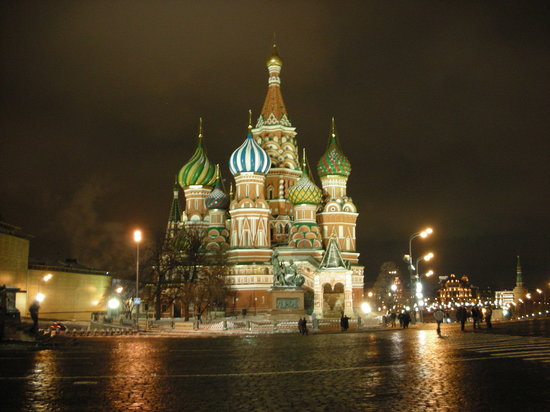
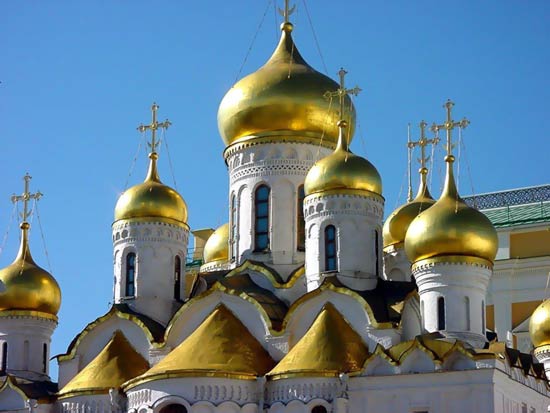
On June 14th, my sister, Rachel, and I embarked on a brother-sister whirlwind tour of Eastern Europe code name *Ostalgie*. Our mission: to get to Moscow without killing each other. Just joking! We get along great. The idea for this trip came after watching the German 2003 movie, Goodbye Lenin! By starting in Berlin, the formerly divided German city and modern-day German capital, and ending in Moscow, we plan to gradually ease into the East and Communism. Here is our itinerary:

June 14-19: Berlin, Germany


June 20-24: Riga, Latvia

June 25-27: Tallinn, Estonia


June 28-July 3: St. Petersburg, Russia


July 4-13: Moscow and surrounding regions


Tuesday, May 4, 2010

Video: Jumping over flames

This is an old video but since I have a fast connection, I decided to go ahead and post it!

For Novruz, a festival that commemorates the first day of Spring, Azeris jump over a bonfire three times to burn away sins/regrets/illnesses of the past year. I did this two weeks after having my hernia operated on! Doctor's orders.

Sunday, May 2, 2010

L'ecole ou je travaille - The school where I work

Teaching English in Azerbaijan is no easy task. Here are some highlights: Schools leftover from the Soviet days are often falling apart. Teachers employ outdated Soviet routine memorization methods and are not honestly trained in the new interactive methodology supported by the government. Most heinously, corruption permeates the entire education structure - from the very top to the very bottom.

These things are, of course, changing ... albeit slowly. Even my region, one of the least developed of all of Azerbaijan, has seen three new schools built in the past five years (one of these schools was financed by the American government). The newspapers and TV programs say everything is moving in a positive direction and the educational system is improving.

Here are some pictures of the school where I work, in which 50 IDP families are still living after the 1993 war with a neighboring country. Of about 50 classrooms, barely ten still serve as such. The rest have been converted into crude housing and storage space. A vous de decider!


Welcome to Number 4 School. Mind the laundry.

View from the entrance.

A kitchen/laundry room/living room on the third floor, in the place of what used to be a hallway.

The location of the old teacher's lounge, now living quarters.

The back yard of the school. Notice how all the windows are covered- in this wing only one classroom remains.


Our interior courtyard. Of all the windows you see, only three are classrooms.

Thursday, April 22, 2010

World map pictures, 2eme partie

Drawing the map with the help of a projector. We're cutting edge.


The core group of organizers and that blond guy that stands out.

Tuesday, April 20, 2010

Earth Day World Map Project

Our very own world map, about 5'x6'

One of our fellow PCVs recently returned from Thailand with an interesting little packet entitled "The World Map Project." According to the introductory section in the packet, a PCV in Guatemala or some other Central American country was waiting for the bus when suddenly it hit her: kids need to paint maps on the walls of their schools!

This epiphany, while not as influential as Newton and his apple, has led to the painting of maps all over the PC world - the latest of which being in School #4 in Barda, Azerbaijan. By painting the map, it is thought, children learn about the many countries of our world and their places relative to their own country. This project is also accompanied by eight lessons that can be taught before, during or after the map is painted.

Now for those of you who know me, there's nothing I love more than a good, solid PROJECT PLAN that follows SPA guidelines. Just gives me goosebumps thinking about it. So, in my PDM zeal (Project Design and Management for you non-PC nerds), I walked a group of kids through the project planning process since the beginning of March. They wrote their own goals and objectives, monitoring plan and action plan. We also identified resources we could use in the community as well as what supplies we would need to purchase. By April 1, we were ready to begin.

The first two weeks of April were thus geography lessons after school. The student leaders led the lessons and students learned about the continents, countries of the world and "how to say salam" in ten languages. They also learned that, surprise!, America is NOT a part of England.

I see London, I see France...

It was a lot of fun, but by the second week students were itching to paint. On Saturday (the 17th), the student leaders gathered at school to draw the map on the classroom wall. We used a projector and pencils and finished up in about two hours. Then on Sunday the real action began. About ten students, not including the student leaders, came to help and get minimally dirty. Despite the inherent disorganization that comes with any project in Azerbaijan, we did a great job and finished painting in a little under 5 hours. Some small countries were unfortunately lost in the painting process- RIP Brunei, San Marino and pretty much any Oceanic country. Those islands were a real pain to find and paint! Oh well.

The kids were really proud of their hard work and like showing it off to other students and teachers. I'm proud of them, too, as volunteerism is not a common "ism" in this country. Now let's see if I can persuade the Director to let us paint a mural...

Saturday, April 17, 2010

April update

So it has been some time since I've updated, and I wanted to check in with all two of my readers. Nah, I'm sure there are three of you.

Anyways, I've been keeping incredibly busy these past two months since my surgery, as working has been a good distraction from the fact that I can't exercise. In the next few weeks, I plan on having some posts on the following subjects:
  • World map project for Earth Day
  • The construction of the SPA-funded English Resource Room
  • AZETA, Azerbaijan English Teachers' Association
  • Some daily adventures

FLEX-Ability Workshop, end of March

Skyline of Tbilisi, the capital of Georgia

A wooden icon of Mary in a church from the 5th century

At the end of March, I was in the land of milk and honey... otherwise known as Georgia. No, not the one next to Alabama - the country! I was one of three PCVs chosen from the Caucasus to help lead the first annual FLEX-Ability South Caucasus Workshop, a four day training program for about 50 youth from Azerbaijan, Armenia and Georgia. This workshop aimed to teach participants about Program Design and Management, create several frameworks for simultaneous community projects to take place in all three countries by August 2010 and forge stronger connections between participants for the three countries. The workshop was organized by American Councils, an organization that sends youth from former Soviet republics to American high schools through a US-govt funded program called FLEX (Future Leaders Exchange). Consequently, all participants in the workshop were former FLEX students, meaning they were talented, bright and, most importantly, fluent in English.

And when I say fluent in English, I mean these kids were telling Chuck Norris jokes and saying things like "everything's bigger in Texas." I kid you not.

Texans, or kids from the Caucasus? Don't be fooled!

Revenons au sujet. So what's the big deal about a workshop like this? As many of you know, the Caucasus is not one of the most peaceful regions in the world. Azerbaijan and Armenia have been officially at war for over 15 years, with Armenia still occupying a handsome chunk of Azerbaijani territory. Russia invaded Georgia two years ago, strewing chaos in the northern regions of the country. Couple these conflicts with the general neighborhood (Chechnya in the north and Iran in the south) and you have quite the precarious place. You also have a place where cultural differences are largely imagined and exploited by media and politicians. It seems that every nationality lays claim to every Caucasian type of food, dance or music.

After the first night, it was clear that the workshop would be a success. We sat in mixed groups at a Georgian restaurant, some participants clearly less than excited to sit next to their "enemies." Yet as soon as the music began, our Georgian hosts got up and performed their national dances. Surprisingly (or not surprisingly), it looked raaaather similar to the dances of Armenia and Azerbaijan. Within minutes, all three nationalities were flailing about Caucasian-style on the dance floor, leaving us poor Americans guessing who was who. In fact, many participants ended up asking themselves the same questions. It was pretty neat to see pre-conceived notions being broken down in the face of the truth. And the truth was, the people of the Caucasus have so much in common it's scary!

The other two PCVs that led the Program workshops. Turns out Armenia has Holland cheese too!

My job during the Workshop was to teach a group of 15-20 participants how to structure projects and write grant proposals effectively in order to improve their local communities. Together, we wrote a project to take place by August 2010- no small task considering the participants had just met each other and were from different, warring countries. But by the end of four days, I am positive my group gained the skills necessary to bring change home. I am so proud of them and inspired by their example. It gives me hope that one day, OUR VISION of a peaceful Caucasus will be OUR REALITY.

Success.